Venue Guide
A Complete Guide to Eloping in Joshua Tree National Park
Everything you need to know about planning an elopement in one of Southern California's most extraordinary landscapes, permits, timing, locations, and what to expect.
Why Joshua Tree?
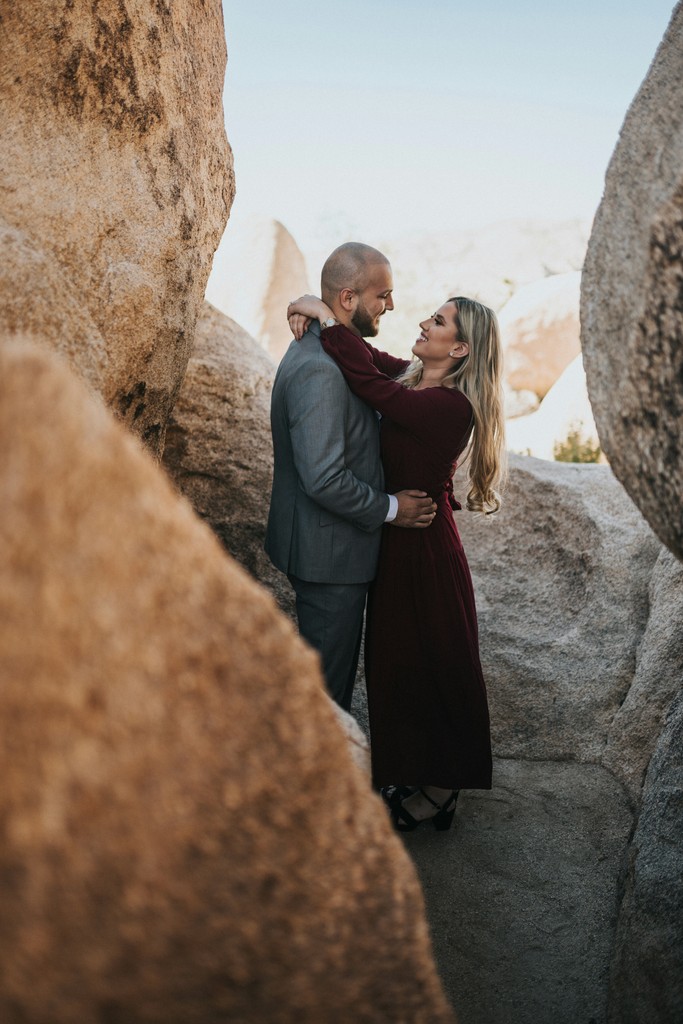
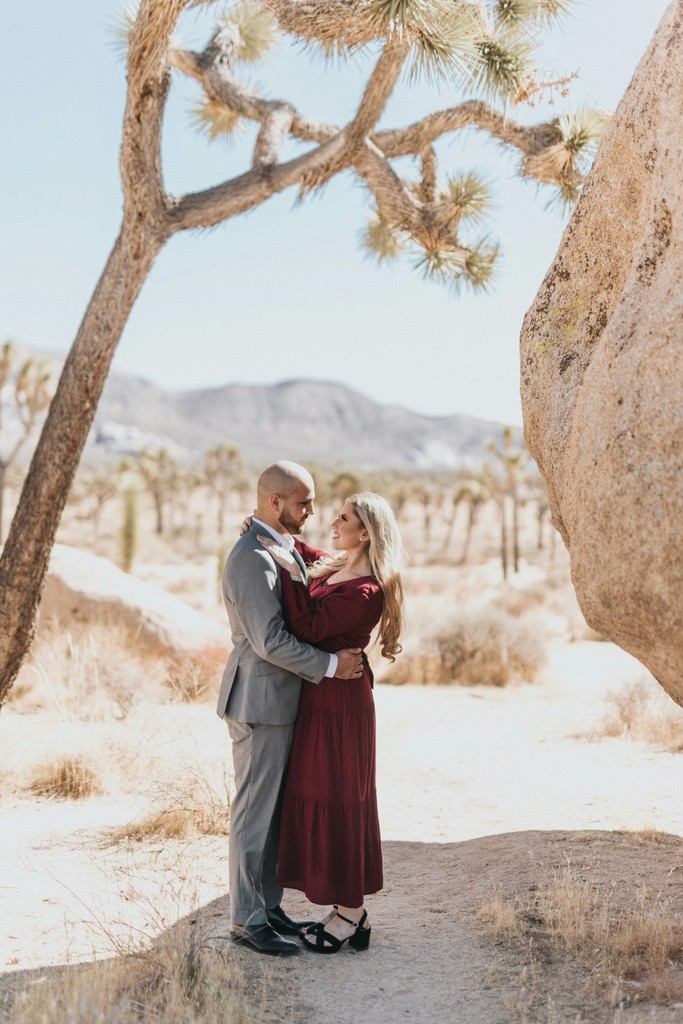
There is nowhere else in Southern California that looks quite like Joshua Tree. The park sits at the convergence of two desert ecosystems, the Mojave and the Colorado, and the result is a landscape so visually distinctive that it reads as almost fictional. Giant boulder formations, twisted Joshua trees silhouetted against impossibly wide sky, and a quality of desert silence that feels genuinely rare two hours from one of the largest cities in the world.
The Permit Situation
Elopements and photography sessions in Joshua Tree National Park require a permit, and this is the detail that most couples underestimate. Commercial photography permits through the National Park Service require advance application, typically 2 to 4 weeks minimum, sometimes longer during peak seasons. I handle this process for every couple I photograph in the park and can walk you through exactly what's needed. Don't let the paperwork deter you. It's manageable and absolutely worth it.
Best Locations Inside the Park
Skull Rock is accessible, dramatic, and photographs beautifully at golden hour when the light catches the curves and pockets of the rock face. Hidden Valley offers a sheltered, intimate atmosphere with boulder walls on all sides, ideal for couples who want to feel contained by the landscape rather than exposed to it. Cholla Cactus Garden at sunset, when the backlight turns every spine luminous, is one of the most extraordinary fifteen minutes of light I've encountered anywhere.
Timing Your Elopement
Spring (March through May) is peak season for a reason. Temperatures are mild, wildflowers bloom across the park floor, and the light is consistently extraordinary. Fall, September through November, is equally beautiful with slightly less foot traffic. Summer is genuinely dangerous. midday temperatures regularly exceed 110°F and the park service strongly discourages extended outdoor activity. If you're committed to a summer date, sunrise is your only window.
What the Day Actually Looks Like
Most Joshua Tree elopements start before dawn. We meet at the trailhead while it's still dark, find our spot as the sky begins to change, and spend the first two hours of daylight working with light that shifts dramatically every few minutes. By 9am the harsh desert sun begins to flatten everything, so the morning hours are precious. I always recommend building your day around that window rather than around a specific clock time.
Is Joshua Tree Right for You?
If you want somewhere that feels genuinely wild, visually unlike anything your guests have seen before, and within easy reach of Los Angeles, yes. Joshua Tree is right for you. Reach out and let's start planning.
Venue Guide
A Complete Guide to Eloping in Joshua Tree National Park
Everything you need to know about planning an elopement in one of Southern California's most extraordinary landscapes, permits, timing, locations, and what to expect.
Why Joshua Tree?
There is nowhere else in Southern California that looks quite like Joshua Tree. The park sits at the convergence of two desert ecosystems, the Mojave and the Colorado, and the result is a landscape so visually distinctive that it reads as almost fictional. Giant boulder formations, twisted Joshua trees silhouetted against impossibly wide sky, and a quality of desert silence that feels genuinely rare two hours from one of the largest cities in the world.
The Permit Situation
Elopements and photography sessions in Joshua Tree National Park require a permit, and this is the detail that most couples underestimate. Commercial photography permits through the National Park Service require advance application, typically 2 to 4 weeks minimum, sometimes longer during peak seasons. I handle this process for every couple I photograph in the park and can walk you through exactly what's needed. Don't let the paperwork deter you. It's manageable and absolutely worth it.
Best Locations Inside the Park
Skull Rock is accessible, dramatic, and photographs beautifully at golden hour when the light catches the curves and pockets of the rock face. Hidden Valley offers a sheltered, intimate atmosphere with boulder walls on all sides, ideal for couples who want to feel contained by the landscape rather than exposed to it. Cholla Cactus Garden at sunset, when the backlight turns every spine luminous, is one of the most extraordinary fifteen minutes of light I've encountered anywhere.
Timing Your Elopement
Spring (March through May) is peak season for a reason. Temperatures are mild, wildflowers bloom across the park floor, and the light is consistently extraordinary. Fall, September through November, is equally beautiful with slightly less foot traffic. Summer is genuinely dangerous. midday temperatures regularly exceed 110°F and the park service strongly discourages extended outdoor activity. If you're committed to a summer date, sunrise is your only window.
What the Day Actually Looks Like
Most Joshua Tree elopements start before dawn. We meet at the trailhead while it's still dark, find our spot as the sky begins to change, and spend the first two hours of daylight working with light that shifts dramatically every few minutes. By 9am the harsh desert sun begins to flatten everything, so the morning hours are precious. I always recommend building your day around that window rather than around a specific clock time.
Is Joshua Tree Right for You?
If you want somewhere that feels genuinely wild, visually unlike anything your guests have seen before, and within easy reach of Los Angeles, yes. Joshua Tree is right for you. Reach out and let's start planning.
Venue Guide
A Complete Guide to Eloping in Joshua Tree National Park
Everything you need to know about planning an elopement in one of Southern California's most extraordinary landscapes, permits, timing, locations, and what to expect.
Why Joshua Tree?
There is nowhere else in Southern California that looks quite like Joshua Tree. The park sits at the convergence of two desert ecosystems, the Mojave and the Colorado, and the result is a landscape so visually distinctive that it reads as almost fictional. Giant boulder formations, twisted Joshua trees silhouetted against impossibly wide sky, and a quality of desert silence that feels genuinely rare two hours from one of the largest cities in the world.
The Permit Situation
Elopements and photography sessions in Joshua Tree National Park require a permit, and this is the detail that most couples underestimate. Commercial photography permits through the National Park Service require advance application, typically 2 to 4 weeks minimum, sometimes longer during peak seasons. I handle this process for every couple I photograph in the park and can walk you through exactly what's needed. Don't let the paperwork deter you. It's manageable and absolutely worth it.
Best Locations Inside the Park
Skull Rock is accessible, dramatic, and photographs beautifully at golden hour when the light catches the curves and pockets of the rock face. Hidden Valley offers a sheltered, intimate atmosphere with boulder walls on all sides, ideal for couples who want to feel contained by the landscape rather than exposed to it. Cholla Cactus Garden at sunset, when the backlight turns every spine luminous, is one of the most extraordinary fifteen minutes of light I've encountered anywhere.
Timing Your Elopement
Spring (March through May) is peak season for a reason. Temperatures are mild, wildflowers bloom across the park floor, and the light is consistently extraordinary. Fall, September through November, is equally beautiful with slightly less foot traffic. Summer is genuinely dangerous. midday temperatures regularly exceed 110°F and the park service strongly discourages extended outdoor activity. If you're committed to a summer date, sunrise is your only window.
What the Day Actually Looks Like
Most Joshua Tree elopements start before dawn. We meet at the trailhead while it's still dark, find our spot as the sky begins to change, and spend the first two hours of daylight working with light that shifts dramatically every few minutes. By 9am the harsh desert sun begins to flatten everything, so the morning hours are precious. I always recommend building your day around that window rather than around a specific clock time.
Is Joshua Tree Right for You?
If you want somewhere that feels genuinely wild, visually unlike anything your guests have seen before, and within easy reach of Los Angeles, yes. Joshua Tree is right for you. Reach out and let's start planning.